
For years, many businesses treated social media and SEO as separate departments. One handled posts and reels, the other handled keywords and rankings. They barely spoke.
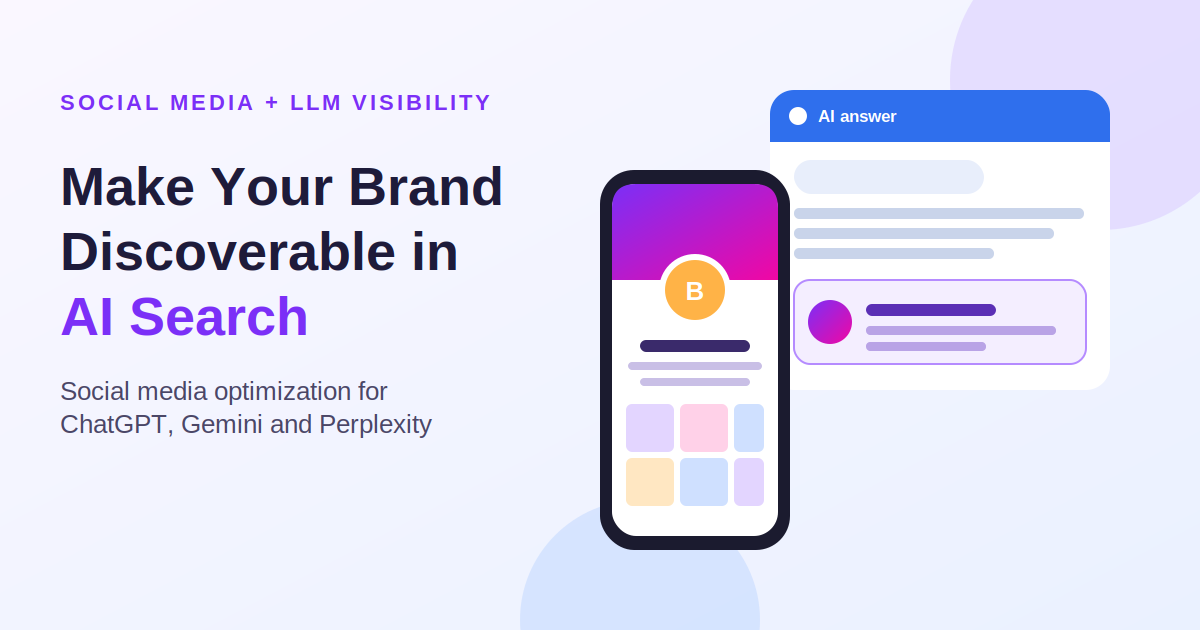
AI search makes that separation harder to justify. When tools like ChatGPT, Gemini and Perplexity put together an answer, social platforms and the conversations on them can end up in the mix. Not always, and not equally across platforms, but often enough that it’s worth planning for.
Why social media matters for AI visibility
There are three practical reasons.
- Public social content can be read. Many posts, videos, captions and profile pages are accessible to search engines and AI systems, which means they can inform how your brand is understood.
- Social shows what real people think. Comments, shares and discussions give context that your own website can’t.
- Platforms are becoming search engines. Plenty of people look up recommendations on Instagram, YouTube and TikTok before they ever open Google.
We can’t tell you that a specific post will make ChatGPT recommend you. Nobody honestly can. But a brand with a clear, active and consistent social presence is easier to recognize than one with a half-abandoned page.
Start with your profiles
Think of every profile as a short, factual introduction to your business. Both people and machines read them.
- Use the same business name everywhere, exactly as it appears on your website and Google Business Profile.
- Write a bio that says plainly what you do, who you help and where. Cleverness comes second.
- Link to your website, and link back to your social profiles from your site.
- Use the same logo, description and contact details across platforms.
- Fill in every optional field, including location, category and website.
It sounds almost embarrassingly basic. But we regularly find brands with three different descriptions on three platforms, and a model trying to summarize them has to guess.
Platform by platform
For B2B brands, LinkedIn is probably the most valuable platform here. Company pages, founder profiles and long-form posts or articles are all publicly readable, and they carry professional context. Have your leadership share useful, opinionated content on the topics you want to be known for, rather than only reposting company news.
YouTube
Video is a major source for both Google and AI tools. Give each video a clear title that matches a real question, write a detailed description, add accurate captions or a transcript, and use chapters. A well-structured how-to video can serve as an answer long after it’s posted.
Instagram and Facebook
These matter most for consumer and local brands. Use descriptive captions rather than a string of hashtags, add alt text to images, tag your location and keep your highlights up to date with services, pricing questions and customer stories. Customers searching Instagram for “best salon near me” are reading what you write.
X, Threads and Reddit
These are conversation platforms. If you take part, do it as a real contributor with something to add. Reddit in particular is cited fairly often in AI answers, but it’s also very sensitive to self-promotion. Answer questions, share experience and be open about who you are.
Quora and niche communities
Detailed, helpful answers on topics you know well can circulate for years. Keep them honest, specific and not salesy.
Create content that works as an answer
AI tools are built to answer questions, so content that actually answers one has an advantage. Try these formats:
- Short videos that start with the question, like “How much does a kitchen renovation cost in Bengaluru?”
- Carousel posts that walk through a process step by step.
- Posts that compare two options and explain who each suits.
- Customer stories that name the problem, the service and the result.
- Live sessions or Q&As that you later repurpose into articles.
Say the key terms out loud and write them on screen. Platforms and search systems are increasingly able to interpret speech and text inside videos.
Connect social content back to your website
Social should support your owned pages, not replace them. Turn your best posts into proper blog articles or FAQ entries. Embed videos on relevant service pages. Mention your social accounts in your website’s structured data, using the sameAs property in your organization schema.
Encourage people to talk about you
Mentions, tags, reviews, user-generated posts and partnerships all add to how your brand shows up online. Invite customers to share their experience and make it easy. Collaborate with creators and partners who genuinely fit your audience.
Mistakes to avoid
- Having inconsistent names, bios or links across platforms.
- Posting without any strategy, then abandoning accounts for months.
- Spamming communities with promotional links.
- Relying on private or closed content only, since AI tools can’t read what isn’t public.
- Publishing generic AI-written captions that say nothing specific.
How to measure progress
Social metrics like likes won’t tell you much here. Look instead at:
- Whether your brand and profiles appear when you search your name in AI tools and search engines.
- Branded search volume over time.
- Profile visits, DMs and enquiries.
- Which social pages or videos are cited or surfaced in AI answers, if any.
- Answers to “How did you hear about us?”
Final thoughts
The aim of social media optimization for LLM visibility isn’t to outsmart an algorithm. It’s to make sure that wherever your brand appears, it looks like the same real, useful and trustworthy business. Get that right, and both people and AI tools will find it easier to point to you.
Want your social channels to support your SEO and AI visibility? Talk to our team about an integrated plan.
Frequently asked questions
Does social media directly affect ChatGPT or Gemini recommendations?
There’s no official confirmation of how much weight any single social signal carries. But public social content can be read and cited, and strong, consistent profiles make a brand easier to identify.
Which social platform is best for LLM visibility?
It depends on your audience. LinkedIn and YouTube are strong for B2B, while Instagram, Facebook and YouTube work well for local and consumer brands. Reddit and Quora can help with community credibility when used honestly.
Should I post more often to improve AI visibility?
Not necessarily. Clear, consistent, useful content matters more than volume.



Leave a Reply